


6.9
Viewer Rating
Combines user and critic ratings from four sources
Drama, Family, TV Movie • 2016 • 85 min • All Ages
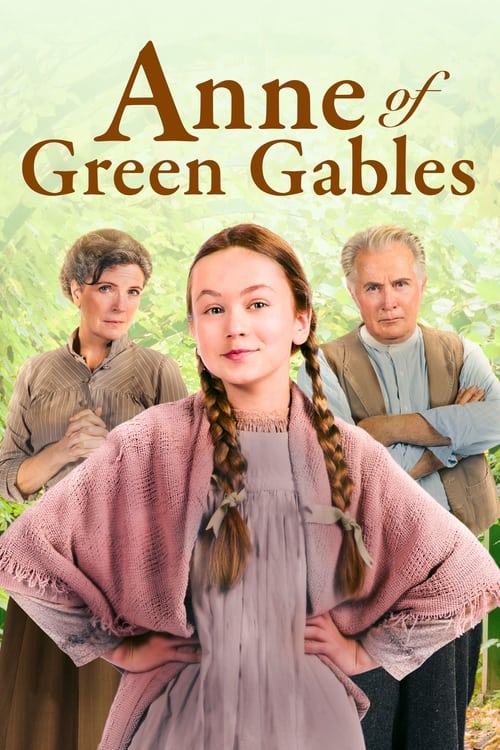
This 2016 TV movie retells L.M. Montgomery's beloved novel about Anne Shirley, a red-haired orphan mistakenly sent to an aging brother and sister on Prince Edward Island who wanted a boy. The story builds around her finding a permanent home, earning affection through sheer force of personality, and growing up in a tight-knit rural community. The Leans Traditional label fits the source material as much as this adaptation. Family formation, community belonging, and a positive Christian backdrop all pull in the same direction. There are no LGBTQ or progressive identity threads, the casting follows source canon, and the G rating signals the whole package is designed for broad, multigenerational family viewing.
Ella Ballentine • Martin Sheen • Sara Botsford
This 2016 TV movie retells L.M. Montgomery's beloved novel about Anne Shirley, a red-haired orphan mistakenly sent to an aging brother and sister on Prince Edward Island who wanted a boy. The story builds around her finding a permanent home, earning affection through sheer force of personality, and growing up in a tight-knit rural community. The Leans Traditional label fits the source material as much as this adaptation. Family formation, community belonging, and a positive Christian backdrop all pull in the same direction. There are no LGBTQ or progressive identity threads, the casting follows source canon, and the G rating signals the whole package is designed for broad, multigenerational family viewing.
Ella Ballentine • Martin Sheen • Sara Botsford
The film explores universal themes of orphanhood, belonging, and the power of imagination, focusing on an individual's journey to find family and acceptance within a traditional community. Its narrative emphasizes personal growth and the transformative nature of love without promoting a specific political ideology.
The film features traditional casting, with roles historically depicted as white portrayed by white actors. The narrative does not critique traditional identities or incorporate explicit DEI themes, maintaining a neutral or positive framing of these elements.
The film celebrates the formation of a devoted and stable family unit, as an orphan finds a loving home with unmarried siblings, highlighting the enduring bonds of commitment and care within a traditional community.
The film portrays Christianity as a foundational and generally positive force within the community, emphasizing its role in moral guidance, social cohesion, and personal development. While individual characters may exhibit human flaws, the narrative consistently aligns with virtues such as kindness, forgiveness, and community spirit inherent in the faith.
The film 'Anne of Green Gables, 2016' presents the classic coming-of-age story of Anne Shirley. The narrative does not include any identifiable LGBTQ+ characters or themes, maintaining a focus on traditional relationships and societal norms of its historical setting.
The film adaptation of Anne of Green Gables, 2016, does not include any identifiable transsexual characters or themes. The story centers on the experiences of Anne Shirley in rural Prince Edward Island, focusing on her relationships and personal growth within a traditional setting. No elements within the plot or character arcs relate to transsexual identity.
The movie does not contain any action or adventure elements.
The 2016 adaptation of Anne of Green Gables maintains the established genders of its core characters from the original novel. Key figures such as Anne Shirley, Marilla Cuthbert, and Matthew Cuthbert are portrayed on screen with the same genders as their canonical literary counterparts, indicating no instances of gender swapping.
The 2016 adaptation of Anne of Green Gables features characters such as Anne Shirley, Marilla Cuthbert, and Matthew Cuthbert, who are canonically established as white in the original source material. These roles are portrayed by white actors in the film. No instances of race swapping are present.
Combines user and critic ratings from four sources






