


7.2
Viewer Rating
Combines user and critic ratings from four sources
Thriller, Crime, Mystery, Drama • 1982 • 117 min • Older Kids (7+)
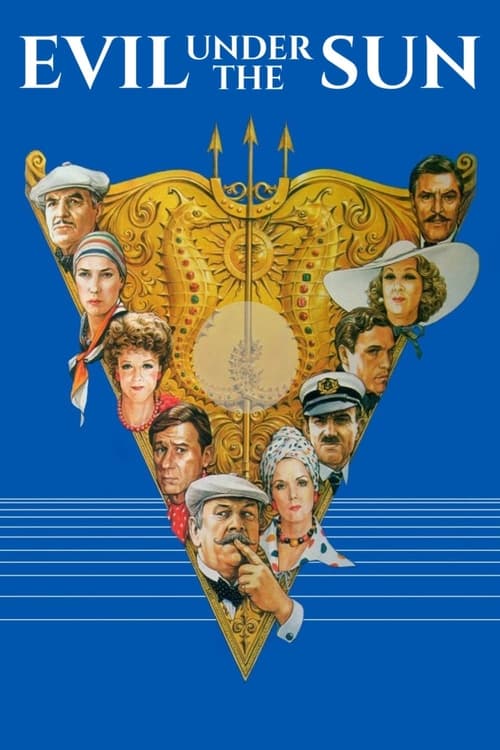
An opulent beach resort provides a scenic background to this amusing whodunit as Poirot attempts to uncover the nefarious evildoer behind the strangling of a notorious stage star.
Peter Ustinov • James Mason • Maggie Smith
An opulent beach resort provides a scenic background to this amusing whodunit as Poirot attempts to uncover the nefarious evildoer behind the strangling of a notorious stage star.
Peter Ustinov • James Mason • Maggie Smith
The film is a classic murder mystery focused on individual crime and its resolution through logical deduction, rather than engaging with broader political or ideological themes. Its core subject matter is inherently apolitical.
This film features traditional casting with a predominantly white ensemble, reflecting the source material and the production era. The narrative focuses on a classic mystery plot without explicitly critiquing traditional identities or incorporating central DEI themes.
The film features a homosexual couple, Patrick and Christine Redfern, whose relationship and Christine's gender deception are integral to their villainous plot to commit murder. Their queer identity is presented as a deceptive tool for criminality, leading to a punitive outcome without any affirming or empathetic counterbalance.
The film 'Evil Under the Sun, 1982' does not feature any identifiable transsexual characters or themes. The narrative centers on a murder mystery involving a group of wealthy individuals on a resort island, with no elements related to transgender identity present in the plot or character arcs.
The movie does not contain any action or adventure elements.
The 1982 film adaptation of Agatha Christie's novel "Evil Under the Sun" maintains the established genders of all major characters from the source material, with no instances of a character canonically established as one gender being portrayed as another.
All major characters in the 1982 adaptation of Agatha Christie's novel, including Hercule Poirot and the primary suspects, are portrayed by actors whose race aligns with the source material's established or implied racial identities. No character canonically established as one race was depicted as a different race.
Combines user and critic ratings from four sources






