

6.9
Viewer Rating
Combines user and critic ratings from four sources
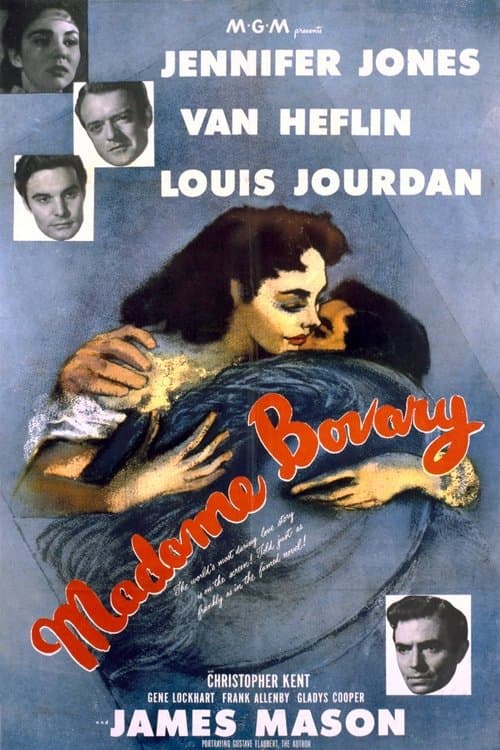
Madame Bovary (1949)
In 19th-century France, doctor's wife Emma Bovary seeks to escape her dull provincial life through various extramarital affairs and extravagant spending, leading to tragic consequences.
In 19th-century France, doctor's wife Emma Bovary seeks to escape her dull provincial life through various extramarital affairs and extravagant spending, leading to tragic consequences.
The film explores universal themes of romantic disillusionment, societal constraints, and the tragic consequences of individual choices, without explicitly promoting a specific political ideology or solution. Its social commentary on 19th-century life and human nature transcends contemporary political divides.
The film features traditional casting with no explicit race or gender swaps of roles. Its narrative focuses on character-driven social critique within its historical context, rather than explicitly critiquing traditional identities or incorporating central DEI themes.
The film portrays the prevailing Catholic society as hypocritical and stifling, where religious observance is often superficial and used for social control rather than genuine spiritual guidance. It highlights how rigid moral codes, when misapplied, contribute to Emma Bovary's tragic downfall and the judgmental nature of the community.
The film Madame Bovary does not feature any identifiable LGBTQ+ characters or themes. Its narrative is solely focused on the heterosexual romantic and financial struggles of its titular character, Emma Bovary, as depicted in the original novel.
The film "Madame Bovary" (1949) is an adaptation of Gustave Flaubert's novel, focusing on Emma Bovary's pursuit of romantic ideals and social status. The narrative does not include any identifiable transsexual characters or themes, nor does it explore gender identity beyond cisgender experiences. Therefore, the film has no net impact on the portrayal of transsexual individuals.
The movie does not contain any action or adventure elements.
The 1949 film "Madame Bovary" is an adaptation of Gustave Flaubert's novel. All major characters in the film retain the same gender as established in the original source material.
The 1949 film "Madame Bovary" adapts Gustave Flaubert's novel, set in 19th-century France. The main characters, including Emma Bovary, are portrayed by actors whose race aligns with their established depiction as white Europeans in the source material. No character's race was altered from the original canon.
Combines user and critic ratings from four sources