7.0
Viewer Rating
Combines user and critic ratings from four sources
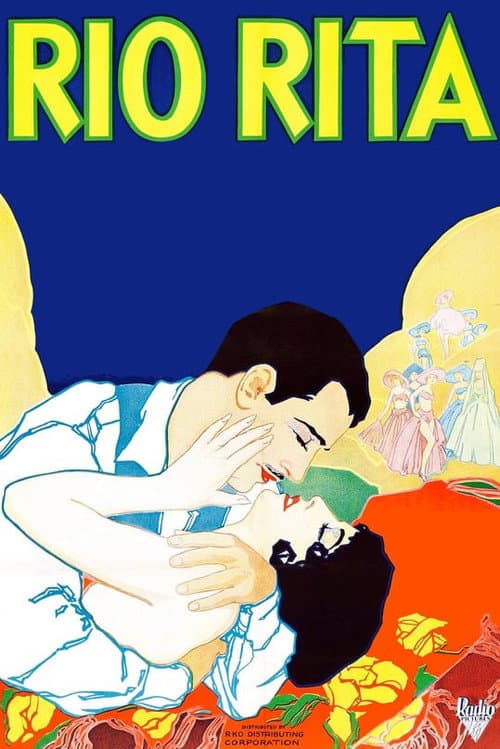
Rio Rita (1929)
Capt. James Stewart pursues the bandit "The Kinkajou" over the Mexican border and falls in love with Rita, though he suspects that her brother is the bandit.
 Prime Video
Capt. James Stewart pursues the bandit "The Kinkajou" over the Mexican border and falls in love with Rita, though he suspects that her brother is the bandit.
Prime VideoThe film is primarily a musical comedy and romance, with its themes of law and order and cross-cultural love serving as narrative devices rather than explicit political statements, leading to a neutral rating.
This movie features a predominantly white cast in its main roles, reflecting the common casting practices of its production era. The narrative presents traditional identities, such as the white male hero, in a positive light without engaging in explicit critiques or centering on modern diversity, equity, and inclusion themes.
The film features characters explicitly established as Mexican, such as Rio Rita and General Esteban, who are portrayed by white actors Bebe Daniels and Robert Woolsey, respectively. This constitutes a race swap where characters of one established racial/ethnic identity are played by actors of a different race.
The 1929 musical comedy 'Rio Rita' primarily centers on a heterosexual romance between a Texas Ranger and a Mexican singer, intertwined with a bandit storyline. There are no discernible LGBTQ+ characters or themes depicted within the film's narrative, leading to a determination of N/A for LGBTQ+ portrayal.
The film "Rio Rita" (1929) is a musical comedy that does not feature any identifiable transsexual characters or themes. Its narrative focuses on a Texas Ranger's undercover mission and a romance in Mexico, without exploring gender identity beyond cisgender portrayals.
The movie does not contain any action or adventure elements.
The 1929 film "Rio Rita" is an adaptation of the 1927 Broadway musical. All major characters, including Rio Rita and Jim Stewart, maintain the same gender as established in the original stage production, with no instances of gender alteration.
Combines user and critic ratings from four sources