

6.2
Viewer Rating
Combines user and critic ratings from four sources
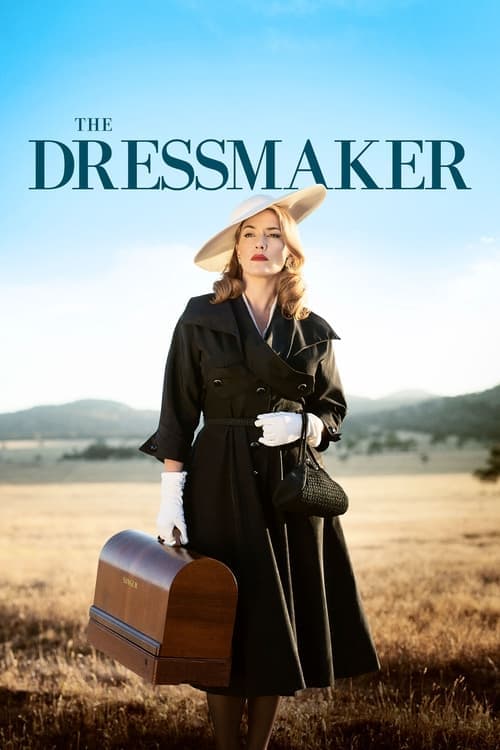
The Dressmaker (2015)
In 1950s Australia, beautiful, talented dressmaker Tilly returns to her tiny hometown to right wrongs from her past. As she tries to reconcile with her mother, she starts to fall in love while transforming the fashion of the town.
In 1950s Australia, beautiful, talented dressmaker Tilly returns to her tiny hometown to right wrongs from her past. As she tries to reconcile with her mother, she starts to fall in love while transforming the fashion of the town.
While the film critiques small-town prejudice and hypocrisy, themes often explored in left-leaning discourse, its ultimate resolution is a highly individualistic act of retribution and escape rather than advocating for systemic change or a specific political ideology.
The movie features a predominantly white cast consistent with its 1950s Australian rural setting, without explicit race or gender swaps. Its narrative critiques the insular and judgmental nature of a small town, focusing on individual character flaws and societal hypocrisy rather than explicitly targeting traditional identities or centering on modern DEI themes.
The film features Sergeant Farrat, a cross-dressing character, whose identity is handled with empathy and respect. The protagonist's acceptance and active support of his self-expression contribute to a net positive portrayal, framing his non-normative gender expression as a source of personal joy rather than shame or ridicule.
The film features Barney McSwiney, a gender non-conforming character, who endures significant prejudice. However, the protagonist's empathetic actions, particularly crafting a dress for him, affirm his identity. His tragic fate underscores the town's cruelty, positioning the film's stance as critical of bigotry and supportive of his worth.
The film portrays the Christian community of Dungatar as deeply hypocritical, judgmental, and cruel, using religious piety to justify their bigotry and ostracism. The narrative critiques the perversion of faith by its adherents rather than the faith itself, but the depiction of its institutions and practices within the film is overwhelmingly negative.
The movie does not contain any action or adventure elements.
The film "The Dressmaker" is an adaptation of Rosalie Ham's novel. A review of the main characters from the source material and their on-screen portrayals reveals no instances where a character's established gender was changed for the film.
Based on the source novel by Rosalie Ham, the characters in "The Dressmaker" were implicitly established as white, consistent with the film's 1950s Australian rural setting. The film's casting maintains these racial portrayals, with no characters depicted as a different race than their source material. Therefore, no race swaps occurred.
Combines user and critic ratings from four sources