
7.9
Viewer Rating
Combines user and critic ratings from four sources
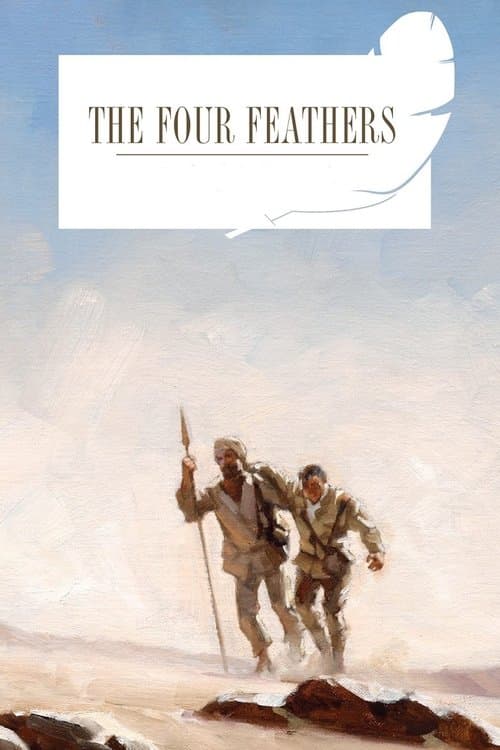
The Four Feathers (1939)
A disgraced officer risks his life to help his childhood friends in battle.
A disgraced officer risks his life to help his childhood friends in battle.
The film's central thesis explicitly promotes traditional values of duty, honor, and patriotism by glorifying British imperial military action and individual self-sacrifice in service of the empire, without questioning the colonial context.
This 1939 British adventure film features traditional casting with primarily white actors in leading roles, consistent with the era. The narrative focuses on themes of courage and duty within the British military during the colonial period, without critical portrayals of traditional identities or explicit DEI themes.
The film's British protagonists, implicitly Christian, embody virtues like duty, courage, and self-sacrifice. Their moral struggles and ultimate redemption are framed within a context that aligns with Western, Christian-influenced ideals.
The Mahdist forces, driven by their interpretation of Islam, are depicted as the primary antagonists. They are characterized by fanaticism, cruelty, and pose a threat to the British Empire, with no significant counterbalancing positive portrayal of the faith.
The Four Feathers (1939) is an adventure film centered on themes of military honor and redemption. There are no identifiable LGBTQ+ characters or themes present in the film's narrative or character arcs. Therefore, the film has no net impact on the portrayal of LGBTQ+ individuals.
The film 'The Four Feathers, 1939' does not feature any identifiable transsexual characters or themes. Its plot centers on a British officer's journey to redeem his honor during wartime, a narrative that does not intersect with transgender identity or experiences.
The film primarily focuses on male characters and their experiences in the British military during the Sudan campaign. Female characters, such as Ethne Burroughs, are present in supportive and romantic roles but are not depicted engaging in or winning physical combat against male opponents.
The 1939 film "The Four Feathers" is a direct adaptation of A.E.W. Mason's 1902 novel. All major characters, including Harry Faversham and Ethne Eustace, retain their original genders as established in the source material, with no instances of gender swapping.
The film is an adaptation of a novel set in the British Empire, featuring British and Sudanese characters. All main characters are portrayed on screen with the same race as established in the source material and historical context, with no changes to their canonical racial identity.
Combines user and critic ratings from four sources