8.1
Viewer Rating
Combines user and critic ratings from four sources
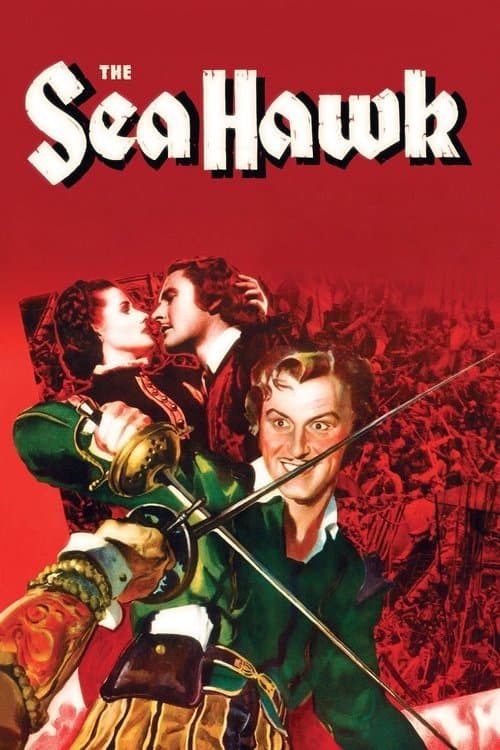
The Sea Hawk (1940)
Dashing pirate Geoffrey Thorpe plunders Spanish ships for Queen Elizabeth I and falls in love with Dona Maria, a beautiful Spanish royal he captures.
Dashing pirate Geoffrey Thorpe plunders Spanish ships for Queen Elizabeth I and falls in love with Dona Maria, a beautiful Spanish royal he captures.
The film champions national defense and sovereignty against an external, tyrannical threat, emphasizing strong, traditional leadership and patriotic unity. This aligns with conservative values of national strength and order, making it right-leaning.
This 1940 adventure film features a cast that is primarily traditional, with no evident intentional race or gender swaps of established roles. The narrative maintains a neutral to positive portrayal of traditional identities, without incorporating explicit critiques or DEI themes.
The film prominently depicts Spanish Catholicism as a force of oppression, cruelty, and fanaticism, particularly through its association with the Inquisition and colonial ambitions. While English Protestantism is implicitly affirmed, the narrative's strong condemnation of Spanish religious tyranny contributes to an overall problematic portrayal of Christianity, reinforcing negative stereotypes of a major branch of the faith.
The Sea Hawk is a classic adventure film from 1940, focusing on pirates, romance, and naval battles during the reign of Queen Elizabeth I. The narrative does not include any explicit or implicit LGBTQ+ characters or themes, aligning with typical Hollywood productions of its era.
The 1940 film "The Sea Hawk" does not feature any identifiable transsexual characters or themes. Its narrative is entirely focused on historical adventure, romance, and political intrigue in the 16th century, with no elements that could be interpreted as depicting or addressing transgender identity.
The film does not depict any female characters engaging in or winning direct physical combat against male opponents. Female roles are primarily supportive or romantic, not involving martial prowess or physical confrontation.
The 1940 film "The Sea Hawk" features an original story and characters, not directly adapting a prior work with established character genders. Queen Elizabeth I, a historical figure, is accurately portrayed. No characters meet the definition of a gender swap.
The 1940 film "The Sea Hawk" features original characters created for the movie, not directly adapting a source with pre-established racial identities or portraying historical figures whose race was altered. Therefore, no race swaps occurred.
Combines user and critic ratings from four sources