8.0
Viewer Rating
Combines user and critic ratings from four sources
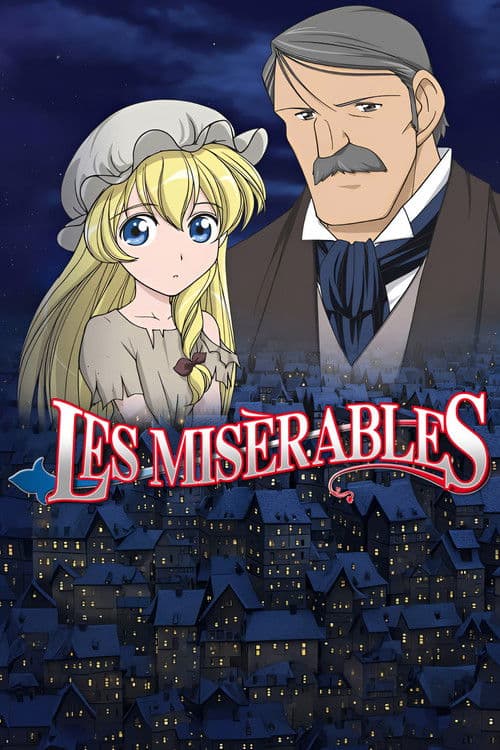
Les Misérables: Little Girl Cosette (2007)
A historical drama anime following young Cosette in early 19th-century France, where economic hardship and social barriers force her separation from her struggling single mother. As Cosette navigates life under a caretaker's watch while her mother seeks employment in the city, the story traces the human cost of poverty and systemic indifference. Adapted from Victor Hugo's classic novel, the series examines survival, family bonds, and the search for dignity amid institutional failure.
A historical drama anime following young Cosette in early 19th-century France, where economic hardship and social barriers force her separation from her struggling single mother. As Cosette navigates life under a caretaker's watch while her mother seeks employment in the city, the story traces the human cost of poverty and systemic indifference. Adapted from Victor Hugo's classic novel, the series examines survival, family bonds, and the search for dignity amid institutional failure.
The narrative critically examines the devastating effects of poverty and social injustice on individuals, highlighting the failures of a rigid legal system. It champions themes of compassion and personal redemption as responses to systemic suffering.
The anime adaptation maintains character depictions consistent with its 19th-century French setting, without explicit re-casting of traditional roles for diversity initiatives. Its narrative explores themes of social injustice and human struggle, framing traditional identities neutrally rather than critically.
The narrative critiques abusive family structures and the societal abandonment of single mothers, while ultimately celebrating the formation of a loving, protective, and morally guided adoptive family unit. The film emphasizes the importance of parental sacrifice and a stable home environment for children.
The narrative prominently features Christian themes of redemption, forgiveness, and charity, particularly through characters like Bishop Myriel, whose actions inspire profound moral transformation. The film consistently aligns with Christian virtues, portraying them as a powerful force for good and personal salvation.
There is not enough publicly available information for AI to assess this category for this movie.
The film Les Misérables: Little Girl Cosette does not feature any identifiable transsexual characters or themes. The narrative focuses on the journey of Cosette and other characters within the original story's framework, without incorporating elements related to transsexual identity. The story's plot does not include any character arcs or plot points that depict transsexual individuals or themes.
The movie does not contain any action or adventure elements.
This animated series adapts Victor Hugo's classic novel. Key characters, including Cosette, Jean Valjean, and Javert, maintain their established genders from the original story. No instances of a character canonically established as one gender being portrayed as another are present.
Les Misérables: Little Girl Cosette is a Japanese anime adaptation of a French novel. While the source material features French characters, the anime's visual style reinterprets them without unambiguously portraying them as a different race.
Combines user and critic ratings from four sources