

6.8
Viewer Rating
Combines user and critic ratings from four sources
The L Word (2004)
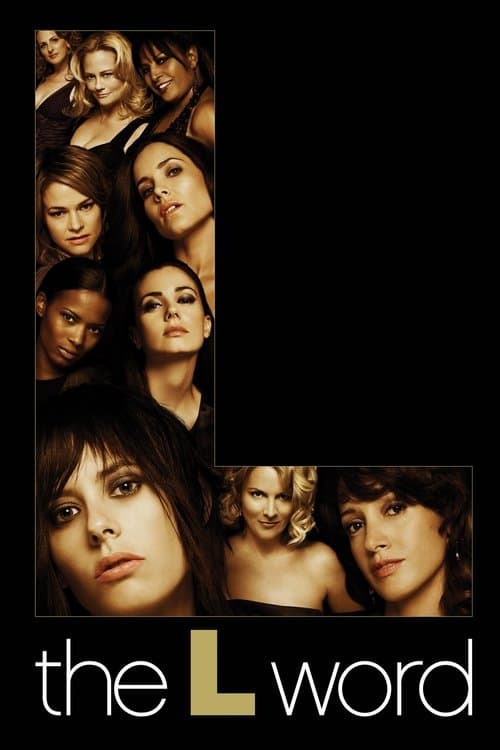
A drama series following a close-knit group of friends navigating careers, relationships, and personal growth in Los Angeles. Created by Ilene Chaiken, the ensemble cast includes Jennifer Beals, Leisha Hailey, Katherine Moennig, Laurel Holloman, and Mia Kirshner as women whose lives intersect across romance, ambition, and friendship. The series premiered on Showtime in 2004 and ran for six seasons, offering an extended look at how these characters' professional and personal worlds evolve over time.
A drama series following a close-knit group of friends navigating careers, relationships, and personal growth in Los Angeles. Created by Ilene Chaiken, the ensemble cast includes Jennifer Beals, Leisha Hailey, Katherine Moennig, Laurel Holloman, and Mia Kirshner as women whose lives intersect across romance, ambition, and friendship. The series premiered on Showtime in 2004 and ran for six seasons, offering an extended look at how these characters' professional and personal worlds evolve over time.
The series explicitly centers on the lives and relationships of lesbian and bisexual women, directly promoting progressive ideology by normalizing LGBTQ+ identities and challenging traditional societal norms. It champions the affirmation of diverse sexual orientations and the importance of supportive communities.
The series features intentional casting that centers on a diverse group of lesbian and bisexual women. Its narrative explicitly explores LGBTQ+ identities and relationships, making themes of diversity, equity, and inclusion central to its storytelling.
The L Word provides a comprehensive and affirming portrayal of LGBTQ+ characters, focusing on the lives and relationships of lesbian and bisexual women. The series explores their identities, careers, friendships, and romantic entanglements with dignity and complexity. It consistently validates queer experiences and love, presenting a supportive and empathetic narrative.
The L Word features Max Sweeney, a trans man whose journey through transition is a central storyline. The portrayal often highlights the significant social and emotional struggles Max faces, including rejection and misunderstanding from friends and family. A controversial plot point involves Max's unexpected pregnancy, which drew criticism for sensationalizing trans male experiences. The narrative frequently centers the discomfort of cisgender characters, leading to a depiction that emphasizes hardship and misunderstanding rather than consistent affirmation.
The series extensively portrays and normalizes alternative family structures, same-sex partnerships, and fluid gender roles, celebrating chosen families and diverse approaches to relationships and parenting.
The series often portrays traditional religious viewpoints, frequently implied to be Christian, as a source of conflict and judgment for its LGBTQ+ characters. These perspectives are typically depicted as obstacles to personal happiness and acceptance, with the narrative framing them as unsupportive or oppressive forces.
The movie does not contain any action or adventure elements.
The L Word is an original television series that premiered in 2004, introducing new characters created specifically for the show. There are no instances where characters with an established gender from prior source material or historical records are portrayed as a different gender within the series.
The L Word (2004) is an original television series that introduced its own set of characters. There are no instances of characters whose race was previously established in source material or prior adaptations being portrayed by actors of a different race.
Combines user and critic ratings from four sources