

6.3
Viewer Rating
Combines user and critic ratings from four sources
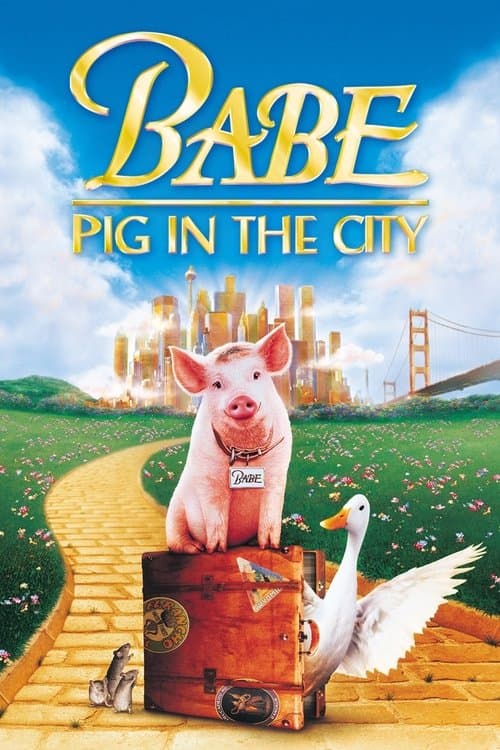
Babe: Pig in the City (1998)
A family fantasy-adventure in which a pig must navigate the urban landscape to save his farm. Babe, the talking pig who won a sheepherding contest, travels to the city after Farmer Hoggett (James Cromwell) suffers an injury that threatens the family's livelihood. Directed by George Miller, the film follows Babe's encounters with a diverse cast of city animals as he works toward his goal. A sequel to the 1995 original, the film combines live-action and animatronic effects to bring its animal characters to life.
A family fantasy-adventure in which a pig must navigate the urban landscape to save his farm. Babe, the talking pig who won a sheepherding contest, travels to the city after Farmer Hoggett (James Cromwell) suffers an injury that threatens the family's livelihood. Directed by George Miller, the film follows Babe's encounters with a diverse cast of city animals as he works toward his goal. A sequel to the 1995 original, the film combines live-action and animatronic effects to bring its animal characters to life.
The film champions empathy for vulnerable creatures and the formation of an inclusive, cooperative community among marginalized animals, contrasting with the harshness of an indifferent urban system.
The film's casting includes visible diversity without explicit race or gender swaps of traditionally white roles. Its narrative maintains a neutral or positive framing of traditional identities, avoiding critical portrayals.
The narrative celebrates the formation of chosen family units among diverse animals, emphasizing the strength and importance of supportive bonds beyond traditional structures.
The film 'Babe: Pig in the City' does not feature any identifiable LGBTQ+ characters or themes. The narrative focuses on the adventures of a talking pig in a big city, exploring themes of friendship, belonging, and overcoming challenges through the interactions of various animal characters.
Babe: Pig in the City does not feature any identifiable transsexual characters or themes. The story centers on the journey of a pig named Babe and his animal companions, exploring themes of friendship and courage within a world of talking animals, without incorporating elements of trans identity.
The film does not depict any female characters engaging in or winning close-quarters physical combat against one or more male opponents. The narrative focuses on the adventures of a talking pig and other animals in a city setting, without featuring human or animal characters in direct physical brawls.
Babe: Pig in the City does not feature any gender swaps. All established characters from previous installments or source material maintain their original genders. New characters introduced in the film do not constitute gender swaps.
Babe: Pig in the City features animal protagonists and human supporting characters. The human characters, such as Mrs. Hoggett, maintain their established racial portrayals from the original film and source material. No characters who were canonically established as one race are depicted as a different race in this installment.
Combines user and critic ratings from four sources




Actors
| Name | Role | Gender | Race | Nationality |
|---|---|---|---|---|
E. G. Daily | Babe (voice) | Female | White |  United States United States |
Magda Szubanski | Mrs. Esme Cordelia Hoggett | Female | White |  United Kingdom United Kingdom |
James Cromwell | Farmer Arthur Hoggett | Male | White | United States |
Mickey Rooney | Fugly Floom, the Speechless Man in Hotel | Male | White | United States |
Mary Stein | Miss Floom | Female | White | United States |
Danny Mann | Ferdinand / Tug / Additional Character Voices (voice) | Male | White | United States |
Glenne Headly | Zootie (voice) | Female | White | United States |
Steven Wright | Bob (voice) | Male | Latino, White | United States |
James Cosmo | Thelonius (voice) | Male | White | United Kingdom |
Paul Livingston | Chef | Male | White |  Australia Australia |
Actor Breakdown
Gender
Race
Nationalities