

6.9
Viewer Rating
Combines user and critic ratings from four sources
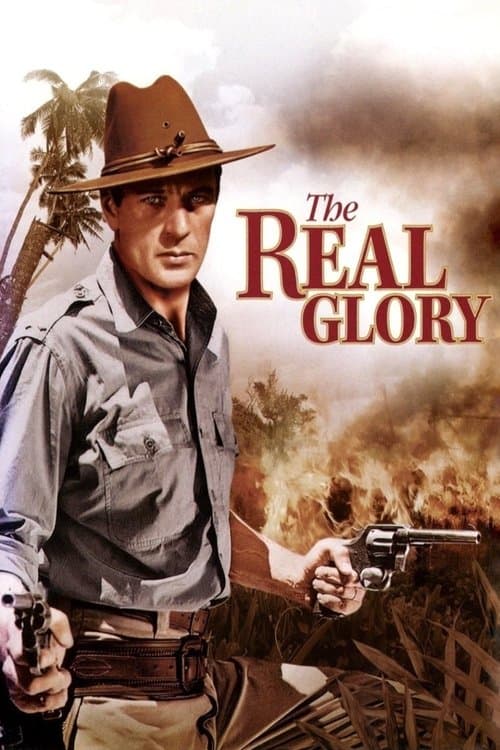
The Real Glory (1939)
Fort Mysang, southern Philippine Islands, under US rule, 1906. A small group of army officers and native troops resist the fierce and treacherous attacks of the ruthless Alisang and his fanatical followers.
Fort Mysang, southern Philippine Islands, under US rule, 1906. A small group of army officers and native troops resist the fierce and treacherous attacks of the ruthless Alisang and his fanatical followers.
The film's central thesis explicitly promotes American exceptionalism and the justification of colonial intervention, portraying American military and medical presence as a benevolent force bringing order and civilization against native resistance.
This 1939 film features a cast primarily composed of prominent white actors of its era, reflecting traditional casting practices. The narrative, typical for its time and genre, does not present a critical portrayal of traditional identities or incorporate explicit DEI themes.
The film, set during the Philippine-American War, features several Filipino and Moro characters, including 'The Datu,' who are portrayed by white actors. This constitutes a race swap as characters canonically non-white are depicted by actors of a different race.
The film implicitly aligns the heroic American soldiers and their mission with Western (implicitly Christian) values, portraying them as righteous and bringing order against a 'savage' enemy.
The film portrays the Moro rebels, who are Muslim, as fanatical, cruel, and resistant to civilization, with their religious practices depicted as savage and a threat to be overcome.
The Real Glory, a 1939 adventure-war film, centers on the Philippine-American War and its characters' experiences. The narrative does not include any discernible LGBTQ+ characters or themes, which is consistent with typical Hollywood productions of that era.
The film 'The Real Glory, 1939' does not feature any identifiable transsexual characters or themes. Its narrative, typical of its era and genre, focuses on a different subject matter, thus rendering the portrayal of transsexual identity as not applicable.
The movie does not contain any action or adventure elements.
The 1939 film "The Real Glory" is an adaptation of a 1937 novel. There is no evidence that any character from the source material was portrayed with a different gender in the film adaptation.
Combines user and critic ratings from four sources