

8.1
Viewer Rating
Combines user and critic ratings from four sources
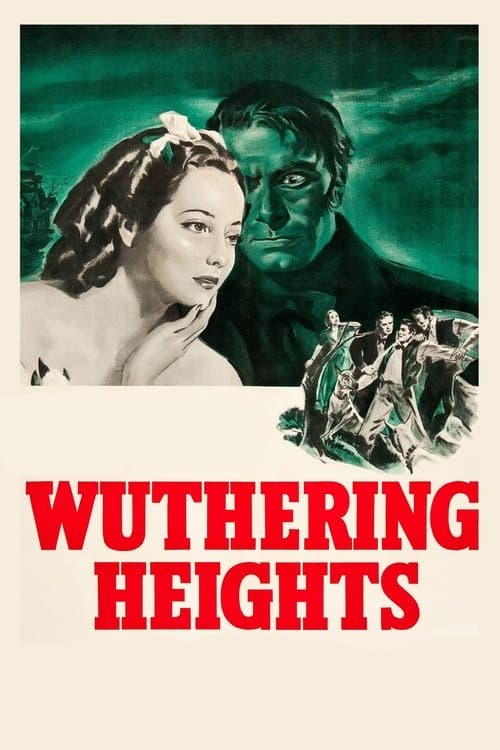
Wuthering Heights (1939)
Young orphan Heathcliff is adopted by the wealthy Earnshaw family and moves into their estate, Wuthering Heights. Soon, the new resident falls for his compassionate foster sister, Cathy. The two share a remarkable bond that seems unbreakable until Cathy, feeling the pressure of social convention, suppresses her feelings and marries Edgar Linton, a man of means who befits her stature. Heathcliff vows to win her back.
Young orphan Heathcliff is adopted by the wealthy Earnshaw family and moves into their estate, Wuthering Heights. Soon, the new resident falls for his compassionate foster sister, Cathy. The two share a remarkable bond that seems unbreakable until Cathy, feeling the pressure of social convention, suppresses her feelings and marries Edgar Linton, a man of means who befits her stature. Heathcliff vows to win her back.
The film is a classic romantic tragedy exploring themes of passionate love, social class, and revenge. While class distinctions contribute to the central conflict, the narrative focuses on individual psychological drama and personal tragedy rather than offering a political critique or solution, leading to a neutral rating.
The 1939 adaptation of 'Wuthering Heights' features traditional casting consistent with its era and source material, without any intentional race or gender swaps. The narrative focuses on its core romantic and dramatic themes, without incorporating explicit critiques of traditional identities or making DEI themes central to its plot.
The film portrays Christianity primarily through characters like Joseph, whose rigid, judgmental, and uncompassionate piety is depicted negatively. While Christian societal norms are present, the narrative often highlights their restrictive nature and the hypocrisy of some adherents, without offering a significant counterbalancing positive portrayal of the faith.
The 1939 film 'Wuthering Heights' does not feature any identifiable LGBTQ+ characters or themes. Its narrative is entirely centered on the passionate and tragic heterosexual romance between Catherine Earnshaw and Heathcliff, aligning with the source material and the filmmaking conventions of its era.
The 1939 film 'Wuthering Heights' does not feature any identifiable transsexual characters or themes. The narrative centers entirely on the tumultuous love story between Catherine Earnshaw and Heathcliff within a traditional 19th-century setting, making the portrayal of transsexual identity N/A.
The movie does not contain any action or adventure elements.
The 1939 film adaptation of Emily Brontë's novel "Wuthering Heights" maintains the established genders of all its major characters from the source material. No characters canonically established as one gender are portrayed as a different gender in the film.
The 1939 film adapts Emily Brontë's novel. While Heathcliff's origins are described as 'dark-skinned gypsy,' this does not establish a non-white racial identity in a way that would constitute a race swap when portrayed by a white actor, given the historical context and common interpretations of the source material. All main characters are portrayed by actors of the same race as implicitly established in the novel.
Combines user and critic ratings from four sources