8.2
Viewer Rating
Combines user and critic ratings from four sources
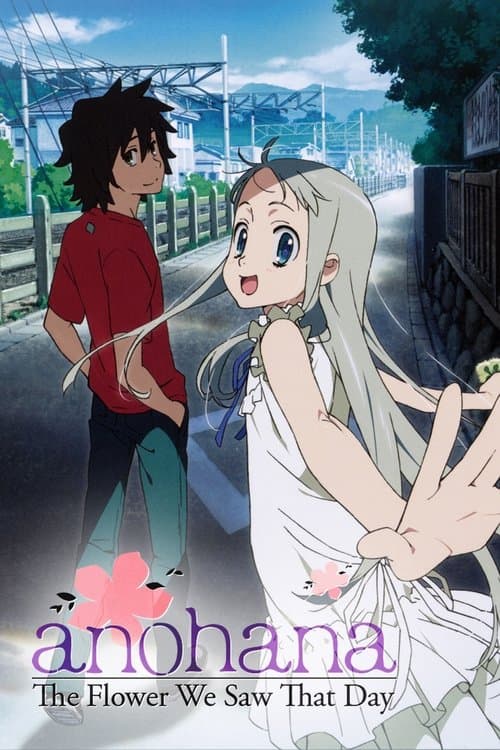
AnoHana: The Flower We Saw That Day (2011)
A supernatural drama following a group of estranged childhood friends reunited by an unexpected encounter. When Jinta Yadomi is visited by the ghost of Meiko Honma, a friend from their past, he learns she has an unfulfilled wish she can no longer remember. As Jinta works to reconnect with his former companions—including Naruko, Anaru, Yukiatsu, and Tsuruko—the group must confront the grief and guilt that drove them apart. Directed by Tatsuyuki Nagai, the series explores how unresolved trauma affects relationships and the possibility of healing through honesty and mutual support.
A supernatural drama following a group of estranged childhood friends reunited by an unexpected encounter. When Jinta Yadomi is visited by the ghost of Meiko Honma, a friend from their past, he learns she has an unfulfilled wish she can no longer remember. As Jinta works to reconnect with his former companions—including Naruko, Anaru, Yukiatsu, and Tsuruko—the group must confront the grief and guilt that drove them apart. Directed by Tatsuyuki Nagai, the series explores how unresolved trauma affects relationships and the possibility of healing through honesty and mutual support.
The narrative explores the profound impact of unresolved grief and guilt on a group of childhood friends, focusing on their journey to confront past trauma and find emotional healing. It champions open communication and mutual support as essential for overcoming personal burdens and moving forward.
The movie features a cast reflective of its Japanese origin, with no explicit recasting of roles for DEI purposes. Its narrative focuses on universal themes of grief and friendship, without critiquing traditional identities.
The narrative explores the profound impact of grief on various family units, depicting the struggles within nuclear families and the crucial role of a chosen family in the healing process. It portrays the emotional realities of loss without explicitly endorsing or critiquing specific family structures or norms.
AnoHana: The Flower We Saw That Day centers on themes of grief, friendship, and unrequited love within a group of childhood friends. The narrative does not feature any identifiable LGBTQ+ characters or themes. The story's emotional core revolves around heterosexual relationships and the process of healing from loss.
The film AnoHana: The Flower We Saw That Day does not feature transsexual characters or themes within its narrative. The story centers on a group of childhood friends dealing with the emotional aftermath of a past tragedy and the appearance of a ghost, with no elements related to transsexual identity or experiences present in its plot or character arcs.
The movie does not contain any action or adventure elements.
This original anime series introduces its characters for the first time within its own narrative. There are no pre-existing source materials or prior adaptations where characters' genders were established differently.
The animated series is an original Japanese production. Characters are depicted as their original race, consistent with the production's origin. No character established as one race in prior canon is portrayed as a different race.
Combines user and critic ratings from four sources