

8.4
Viewer Rating
Combines user and critic ratings from four sources
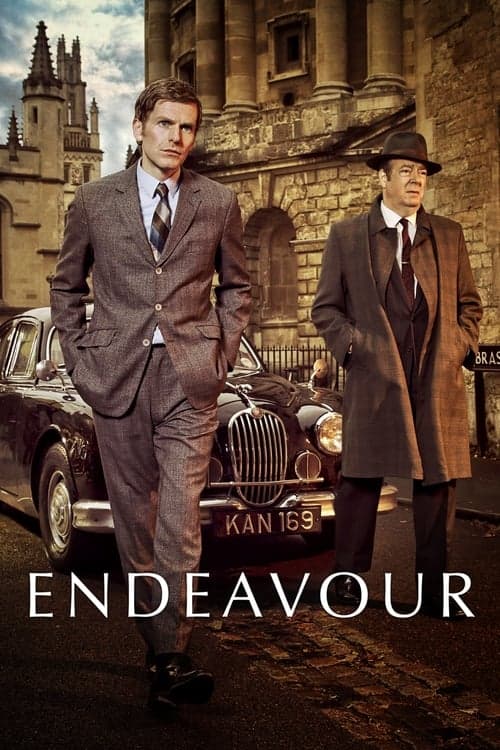
Endeavour (2013)
A detective procedural following the formative years of Endeavour Morse as a young constable with Oxford City Police in 1960s-70s Britain. Shaun Evans stars as the ambitious detective whose early cases and encounters with colleagues and superiors will define his investigative approach and character. Created by Russell Lewis, the series is a prequel to the long-running Inspector Morse, exploring how personal integrity and methodical detective work shape a career amid the social and institutional complexities of the era.
A detective procedural following the formative years of Endeavour Morse as a young constable with Oxford City Police in 1960s-70s Britain. Shaun Evans stars as the ambitious detective whose early cases and encounters with colleagues and superiors will define his investigative approach and character. Created by Russell Lewis, the series is a prequel to the long-running Inspector Morse, exploring how personal integrity and methodical detective work shape a career amid the social and institutional complexities of the era.
Endeavour explores crime and justice within the evolving social landscape of 1960s-70s Britain, often highlighting societal problems like classism and corruption. The narrative consistently champions individual integrity and the diligent pursuit of truth within the existing legal framework, rather than advocating for specific ideological reforms.
The casting for this series primarily features traditional roles without explicit race or gender swaps. The narrative maintains a neutral or positive framing of traditional identities, consistent with its period setting and genre.
The series includes Dr. Max DeBryn, a prominent pathologist, who is gay. His sexuality is portrayed as an incidental aspect of his character, integrated into the narrative without becoming a central plot point or source of conflict. The depiction is respectful, presenting the character with dignity and professionalism, avoiding harmful stereotypes or overt commentary on his sexual orientation.
The series primarily focuses on detective work and character development, with family structures and values serving as background elements rather than central narrative themes. The depiction of family life is incidental, offering no clear endorsement or critique of specific family norms.
The series frequently portrays established Christian institutions and some religious figures as hypocritical or morally compromised, often serving as a backdrop for crimes and societal failings. The narrative exposes the darker aspects within these structures without offering significant counterbalancing positive portrayals of the faith itself.
Endeavour, 2013 does not feature identifiable transsexual characters or themes. The narrative does not include any elements related to transsexual identity or experiences, resulting in no specific portrayal to evaluate.
The movie does not contain any action or adventure elements.
Endeavour, a prequel to Inspector Morse, features characters whose genders are consistent with their established portrayals in the original novels and television series. No significant characters canonically established as one gender are depicted as a different gender in this adaptation.
The series "Endeavour" serves as a prequel to the "Inspector Morse" television series, which is based on novels. Key characters, including Endeavour Morse and Max DeBryn, maintain their established racial portrayals from the original source material and previous adaptations. No instances of a character canonically established as one race being portrayed as a different race are present.
Combines user and critic ratings from four sources