8.1
Viewer Rating
Combines user and critic ratings from four sources
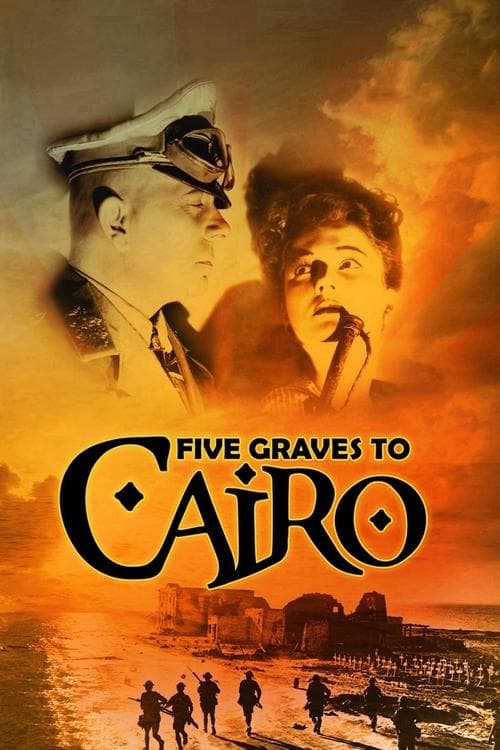
Five Graves to Cairo (1943)
During the 1942 North African campaign, a British straggler passes as a waiter at the hotel commandeered as Erwin Rommel's headquarters. He has thoughts of assassinating Rommel but his cover may provide an even better use.
During the 1942 North African campaign, a British straggler passes as a waiter at the hotel commandeered as Erwin Rommel's headquarters. He has thoughts of assassinating Rommel but his cover may provide an even better use.
The film's neutral rating stems from its focus on the universally accepted conflict of fighting Nazism during WWII, with its solution centered on individual ingenuity and strategic military action rather than themes aligning with specific left or right political ideologies.
This 1943 war film features a predominantly white main cast, reflecting traditional Hollywood casting practices of its era. The narrative centers on a white male protagonist and antagonist, and does not critically portray traditional identities or explicitly address diversity, equity, or inclusion themes.
Five Graves to Cairo, a 1943 war thriller, does not feature any identifiable LGBTQ+ characters or themes. The narrative focuses on espionage and wartime survival in North Africa, with no elements related to queer identity.
The 1943 war film "Five Graves to Cairo" does not feature any identifiable transsexual characters or themes. Its narrative focuses on espionage and military strategy in North Africa during World War II, with no elements related to transgender identity.
The movie does not contain any action or adventure elements.
Based on the film's adaptation of the play "Hotel Imperial" and its portrayal of historical figures, no major or legacy characters were depicted with a different gender than their established source or historical identity.
Analysis of major characters and their portrayals in "Five Graves to Cairo" (1943) reveals no instances where a character canonically or historically established as one race is depicted as a different race. The casting aligns with the racial depictions of the period.
Combines user and critic ratings from four sources