7.3
Viewer Rating
Combines user and critic ratings from four sources
Samurai 7 (2004)
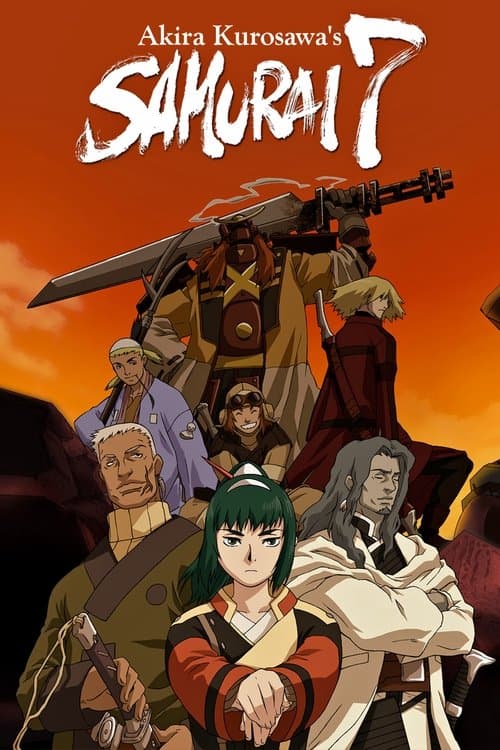
An animated action series following a young priestess named Kirara who recruits a band of samurai to defend vulnerable villages from a tyrannical warrior clan. Directed by Toshifumi Takizawa, the 2004 series blends historical samurai fiction with ensemble adventure storytelling, focusing on themes of duty, heroism, and collective defense against exploitation. The narrative emphasizes individual skill and moral resolve as paths to restoring order and protecting communities under siege.
An animated action series following a young priestess named Kirara who recruits a band of samurai to defend vulnerable villages from a tyrannical warrior clan. Directed by Toshifumi Takizawa, the 2004 series blends historical samurai fiction with ensemble adventure storytelling, focusing on themes of duty, heroism, and collective defense against exploitation. The narrative emphasizes individual skill and moral resolve as paths to restoring order and protecting communities under siege.
The narrative centers on villagers hiring samurai to defend against predatory bandits, highlighting the struggle of the vulnerable against exploitation. The solution emphasizes individual heroism, duty, and collective action to restore order and protect the community, balancing themes of social justice with traditional virtues.
The animated series features a diverse cast of characters inherent to its Japanese cultural setting, without explicitly recasting traditionally white roles. The narrative focuses on themes of heroism and duty within its historical context, without critically portraying traditional identities.
The series primarily focuses on themes of duty, sacrifice, and the formation of a strong, chosen family among the samurai, alongside a cohesive village community. While traditional family units are present, the narrative does not explicitly endorse or critique specific family structures or norms.
There is not enough publicly available information for AI to assess this category for this movie.
Samurai 7 does not include any identifiable transsexual characters or themes within its narrative. The story focuses on a group of samurai defending a village from bandits, without exploring gender identity beyond cisgender portrayals. No plot points or character arcs are dedicated to transsexual experiences.
Female characters in the series do not engage in or achieve victory in close-quarters physical combat against male opponents. Their roles do not involve direct physical confrontation or martial arts prowess in battles.
The anime series "Samurai 7" is an adaptation of Akira Kurosawa's "Seven Samurai." All seven titular samurai characters in the anime retain the male gender established in the original film. No significant characters who were canonically male in the source material are portrayed as female in this adaptation, and vice-versa.
Samurai 7 is an anime adaptation of Akira Kurosawa's "Seven Samurai." The animated characters are consistently depicted as Japanese, aligning with the original source material set in feudal Japan. No characters established as one race in the source material are portrayed as a different race in this series.
Combines user and critic ratings from four sources