6.8
Viewer Rating
Combines user and critic ratings from four sources
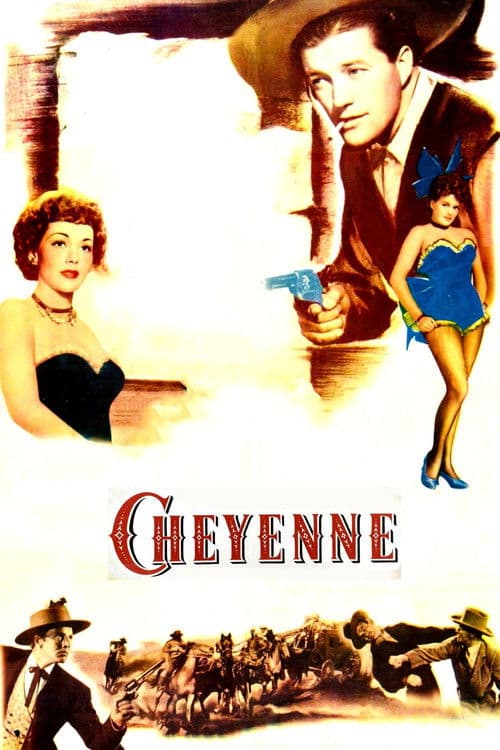
Cheyenne (1947)
Slick gambler James Wylie is apprehended by the law and given the option to forgo a prison sentence if he poses as a bandit. His mission is to uncover the identity of the Poet, a notorious outlaw who has been holding up bank-owned stagecoaches and leaving verses at the crime scenes to taunt the authorities. James finds time to woo the Poet's lovely wife, Ann, who initially cold-shoulders him. But, as a romance develops, they partner up to find the robber.
Slick gambler James Wylie is apprehended by the law and given the option to forgo a prison sentence if he poses as a bandit. His mission is to uncover the identity of the Poet, a notorious outlaw who has been holding up bank-owned stagecoaches and leaving verses at the crime scenes to taunt the authorities. James finds time to woo the Poet's lovely wife, Ann, who initially cold-shoulders him. But, as a romance develops, they partner up to find the robber.
The film's central conflict revolves around an individual's mission to restore law and order against criminal elements, championing individual responsibility and action as the solution. This emphasis on individual agency and the upholding of justice subtly aligns with right-leaning values.
This 1947 Western features a cast primarily composed of white actors, reflecting the traditional casting practices of its era without intentional race or gender swaps for established roles. The narrative centers on white protagonists, portraying traditional identities in a neutral or positive light, and does not incorporate explicit critiques of these identities or strong DEI themes as central to its plot.
The film 'Cheyenne' (1947) is a traditional Western that does not include any discernible LGBTQ+ characters or themes. Its narrative centers on crime, justice, and romance typical of its genre and era, with no elements related to queer identity.
The 1947 Western film 'Cheyenne' does not include any transsexual characters or themes. Its narrative focuses on a lawyer tracking a stagecoach robber, aligning with typical genre conventions of its era without addressing transgender identity.
The movie does not contain any action or adventure elements.
Cheyenne (1947) is an original Western film, not an adaptation of pre-existing material with established characters. All characters were created for this specific film, thus no gender swaps occurred from prior canon or historical records.
The film "Cheyenne" (1947) features original characters created for this specific movie. There is no prior source material, historical record, or previous installment establishing the race of its characters before this film's production.
Combines user and critic ratings from four sources