7.8
Viewer Rating
Combines user and critic ratings from four sources
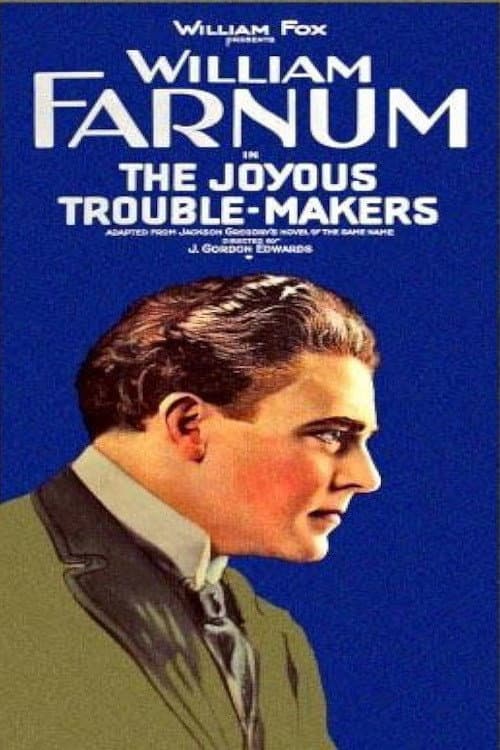
The Joyous Trouble-Makers (1920)
Spirited Beatrice Corlin challenges William Steele to successfully construct a cabin on the disputed land, promising to cook him a home-cooked dinner if he succeeds. Beatrice then enlists the aid of an acquaintance named Joe Embry to help her win the bet. After several clashes between the men, Embry’s true colors are revealed when he abducts Beatrice. Learning of the treachery, William comes to her rescue. The ordeal brings William and Beatrice to the realization that they have fallen in love with each other. Rather than settling their wager, they cancel the bet by merging their land and getting married.
Spirited Beatrice Corlin challenges William Steele to successfully construct a cabin on the disputed land, promising to cook him a home-cooked dinner if he succeeds. Beatrice then enlists the aid of an acquaintance named Joe Embry to help her win the bet. After several clashes between the men, Embry’s true colors are revealed when he abducts Beatrice. Learning of the treachery, William comes to her rescue. The ordeal brings William and Beatrice to the realization that they have fallen in love with each other. Rather than settling their wager, they cancel the bet by merging their land and getting married.
Due to the extreme lack of available plot details and thematic information for this film, it is impossible to identify any specific political leanings, resulting in a neutral rating.
Released in 1917, 'The Joyous Trouble-Makers' is assessed to feature primarily traditional casting, consistent with the cinematic norms of its era, without evidence of intentional race or gender swaps. The narrative is also presumed to maintain a neutral or positive framing of traditional identities, as explicit DEI critiques were not a common thematic element in films of that period.
Based on available plot summaries and historical information, 'The Joyous Trouble-Makers' does not feature any identifiable LGBTQ+ characters or themes. Consequently, the film's net impact on LGBTQ+ portrayal is not applicable, as there is no depiction to evaluate.
The film 'The Joyous Trouble-Makers' (1920) is a silent crime drama centered on a jewel thief and a detective. There is no evidence from plot summaries, character descriptions, or historical context to suggest the presence of transsexual characters or themes. Therefore, the film does not depict or engage with transgender identity in any capacity.
Based on available plot summaries and genre classification for this 1917 silent drama, there are no indications of female characters engaging in or winning direct physical combat against male opponents. The film's narrative focuses on dramatic and romantic elements typical of the era, rather than action sequences involving such feats.
This 1920 film is an original production, not an adaptation of existing material or a reboot of established characters. Therefore, there are no pre-existing canonical or historical characters whose gender could have been altered.
The Joyous Trouble-Makers (1920) is a silent film. There is no widely known source material or historical context indicating that its characters were canonically, historically, or widely established as one race and then portrayed as a different race in the film.
Combines user and critic ratings from four sources