


8.9
Viewer Rating
Combines user and critic ratings from four sources
Animation, Family, Science Fiction • 2008 • 98 min • All Ages
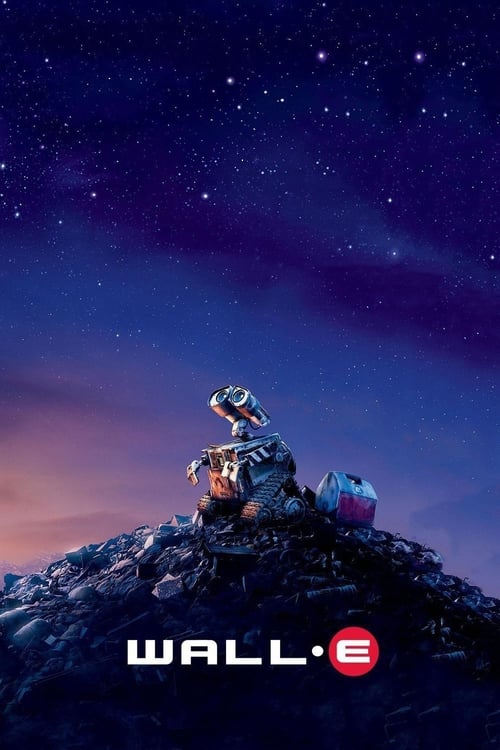
After hundreds of years doing what he was built for, WALL•E— a robot designed to clean up the earth—discovers a new purpose in life when he meets a sleek search robot named EVE. EVE comes to realize that WALL•E has inadvertently stumbled upon the key to the planet's future, and races back to space to report to the humans. Meanwhile, WALL•E chases EVE across the galaxy and sets into motion one of the most imaginative adventures ever brought to the big screen.
Ben Burtt • Elissa Knight • Jeff Garlin
After hundreds of years doing what he was built for, WALL•E— a robot designed to clean up the earth—discovers a new purpose in life when he meets a sleek search robot named EVE. EVE comes to realize that WALL•E has inadvertently stumbled upon the key to the planet's future, and races back to space to report to the humans. Meanwhile, WALL•E chases EVE across the galaxy and sets into motion one of the most imaginative adventures ever brought to the big screen.
Ben Burtt • Elissa Knight • Jeff Garlin
The film's central narrative is a cautionary tale about environmental destruction and the dangers of unchecked consumerism and corporate control, which are themes predominantly associated with progressive ideology. The solution involves rejecting corporate-imposed convenience and actively restoring the planet.
The film primarily features robot characters, and its human characters are depicted in a generic animated style where racial or gender identity is not a central theme or a point of explicit DEI intervention. The narrative focuses on themes of environmentalism, consumerism, and corporate responsibility, without explicitly critiquing traditional identities or centering DEI themes related to race or gender.
WALL·E does not depict any identifiable LGBTQ+ characters or themes. The narrative centers on the romance between two robots and humanity's journey, without incorporating elements related to queer identity or experience.
The film WALL·E does not feature any identifiable transsexual characters or themes. Its narrative primarily explores environmental issues, consumerism, and the evolution of artificial intelligence, with no elements that depict or allude to transgender identity or experiences. For example, the main characters, WALL·E and EVE, are robots whose identities are defined by their programming and purpose, not gender identity.
The movie does not contain any action or adventure elements.
WALL·E is an original animated film with characters created specifically for this production. There is no prior source material, historical context, or previous installments from which characters' genders could have been established differently.
WALL·E is an original animated film featuring robots and human characters created specifically for the movie. There is no prior source material or historical context where any character's race was established differently, thus precluding any race swaps.
Combines user and critic ratings from four sources






