

7.0
Viewer Rating
Combines user and critic ratings from four sources
Music, Romance, Drama • 1951 • 107 min
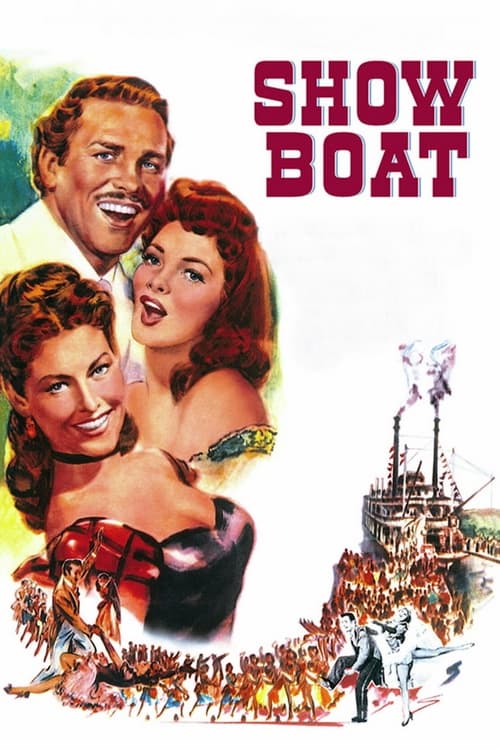
A dashing Mississippi river gambler wins the affections of the daughter of the owner of the Show Boat.
Kathryn Grayson • Ava Gardner • Howard Keel
A dashing Mississippi river gambler wins the affections of the daughter of the owner of the Show Boat.
Kathryn Grayson • Ava Gardner • Howard Keel
The film is left-leaning due to its central critique of racial prejudice and the tragic consequences of miscegenation laws, aligning with progressive values by highlighting systemic injustice, even as it focuses on individual suffering and resilience rather than explicit political solutions.
The movie features visible racial diversity through its casting of Black characters in significant roles, reflecting the source material. Its narrative centrally addresses themes of racial prejudice and the societal impact of discriminatory laws, offering a strong critique of traditional racial hierarchies prevalent in its historical setting.
Julie LaVerne, a character canonically established as mixed-race (part Black) in the source novel and musical, is portrayed by a white actress (Ava Gardner) in the 1951 film, constituting a race swap.
The film portrays a society where some prejudices, though not explicitly religious, were often justified by religious interpretations. However, the narrative condemns these injustices, eliciting sympathy for the victims and aligning with themes of enduring love and human dignity, rather than critiquing the faith itself.
The film "Show Boat" (1951) does not feature any identifiable LGBTQ+ characters or themes. Its narrative primarily focuses on racial prejudice, heterosexual romance, and the lives of performers on a Mississippi show boat in the late 19th and early 20th centuries, with no elements related to queer identity.
The film 'Show Boat' (1951) does not feature any transsexual characters or themes. Its narrative primarily explores racial prejudice and romantic relationships within the context of a Mississippi show boat, with no depiction of gender identity beyond cisgender roles.
The movie does not contain any action or adventure elements.
The 1951 film "Show Boat" is an adaptation of the 1927 stage musical and 1926 novel. All major characters in the film retain their established genders from the original source material, with no instances of a character canonically established as one gender being portrayed as a different gender.
Combines user and critic ratings from four sources






